
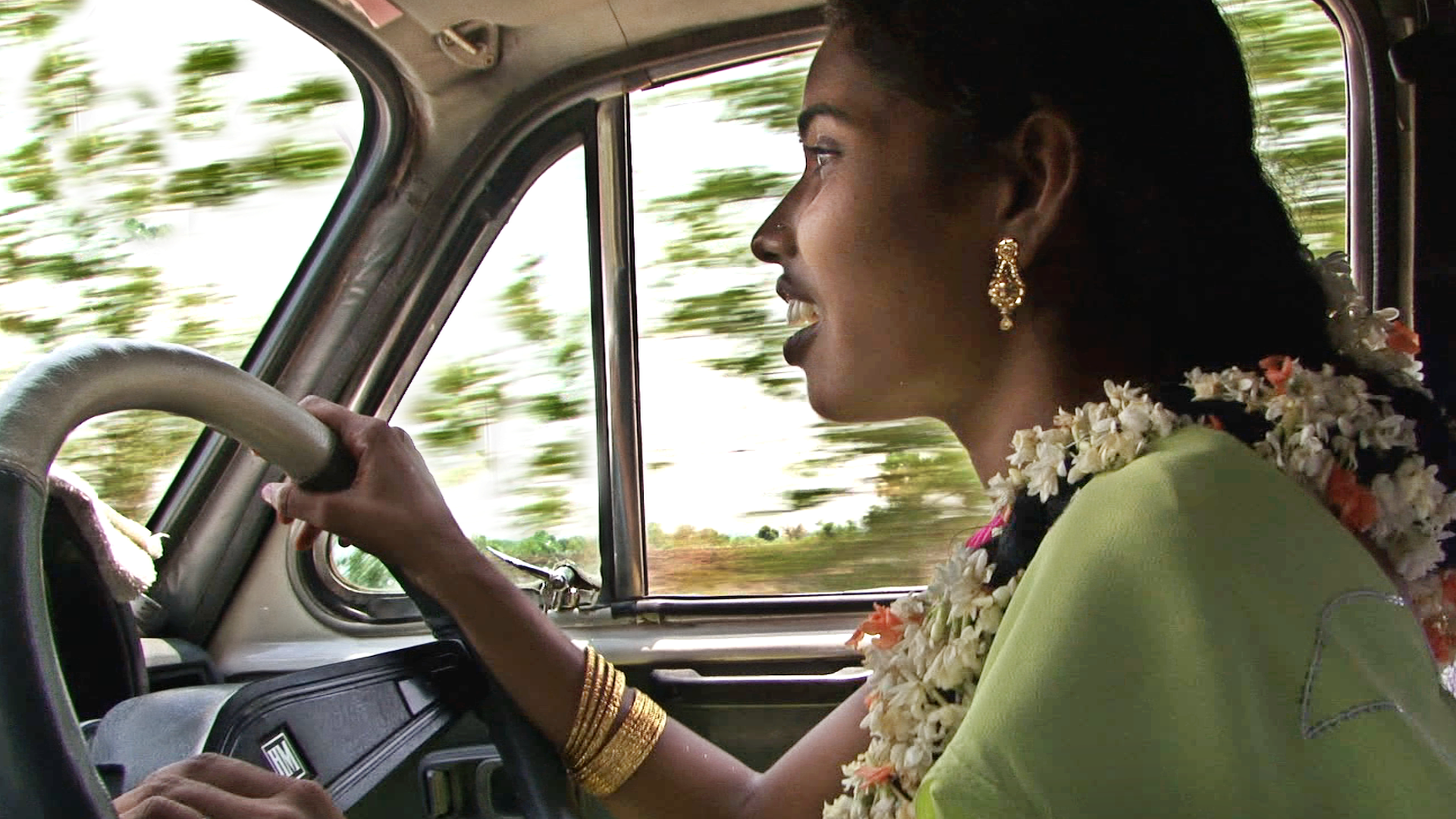

Driving with Selvi
SOCIAL IMPACT & GENDER EQUALITY | DOCUMENTARY FILM & IMPACT CAMPAIGN
Designing the pathway that carried one woman's story into one million lives
The film existed. The story was extraordinary. Selvi, a former child bride who escaped a violent marriage to become South India’s first female taxi driver, had already premiered at Raindance Film Festival in London, screened at more than 100 festivals worldwide, and won eleven awards. TimeOut London named it one of the year’s top films. IDFA ranked it among its top ten audience favourites.
The structural question was not whether the story had power. It was whether the story had a pathway.
A documentary that wins awards but reaches only festival audiences does not change behaviour. The goal was to screen Driving with Selvi to one million girls between the ages of ten and nineteen at risk of child marriage, and to women facing gender-based violence and under-employment. That is not a distribution challenge. It is a narrative infrastructure challenge: how do you design the conditions under which a single story can move through communities, institutions, and funding relationships in a way that produces measurable change in the people who see it?
HGC worked with the filmmaker to design and communicate that pathway that brought funder partners whose mandates aligned with the film’s target audiences, and grassroots organizations, educational institutions, and livelihood training centres on the frontlines of girls’ and women’s rights. An architecture was built that allowed the film to be embedded in existing programming or presented as a standalone event. That structure created safe space for dialogue on child marriage, domestic violence, girls’ education, and women’s economic independence.
The work culminated in a 25-day screening tour across North and South India, led by filmmaker Elisa Paloschi and Selvi herself, with 17 screening partners and two influencer gala events hosted by the Canadian Diplomatic Mission to India. The tour received coverage from more than 50 media outlets.
Impact data collected six months after screenings showed what the pathway made possible. Eighty-two percent of respondents reported thinking more about violence against women and girls. Ninety-five percent reported increased optimism in the face of adversity. Seventy-three percent reported feelings of courage and strength. All screening partners observed more girls and women making plans to continue school, pursue livelihoods, or drive — before or regardless of marriage.
The story did not change because it was amplified. It changed because it was given a structure through which it could travel with integrity, land with specificity, and leave something behind.
WATCH the film here.